
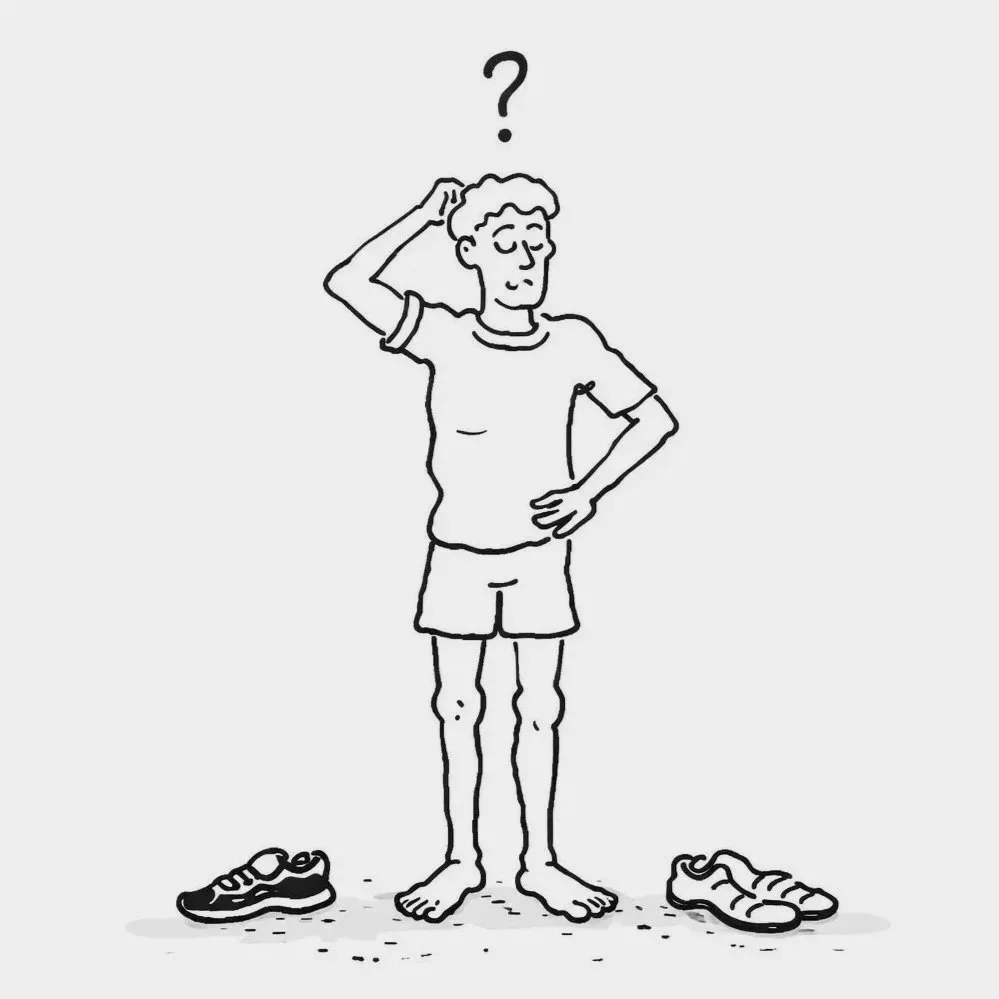
The shoe dilema
Carbon supershoes, barefoot running — and choosing wisely in an age of extremes
By Professor Alister Hart
Chrissie Wellington — four-time Ironman World Champion and leading endurance athlete of her generation — was resting in a walking boot when she told me about her latest stress fracture. She’s previously fractured her calcaneus and navicular — emerging more insightful, and more cautious about simple explanations.
She didn’t point to a single cause but listed a familiar constellation: high training load, energy deficiency, perimenopause, low bone density — and a recent change in footwear to a shoe with a pronounced rocker that she’d begun wearing regularly.
Such an answer can feel uncomfortable. We prefer clean stories: one cause, one fix, one thing to blame. Running shoes invite this kind of thinking — especially now. Carbon plates, foam stacks and rockered soles promise speed, efficiency and protection. Minimalist shoes promise a return to something purer and more ‘natural’. Both suggest the right shoe might be the answer.
Sophie Raworth is a different kind of runner — an amateur marathon enthusiast known to many as a BBC news presenter. And she’s also experienced complex adverse effects of carbon super shoes.
So what are the footwear choices, what can we learn from Chrissie and Sophie’s experiences, and how should you choose?
An age of extremes
Modern runners find themselves pulled between two poles. At one end are carbon-plated ‘supershoes’, highly engineered and promising measurable improvements in running economy for personal bests. At the other are minimalist or barefoot shoes, offering a return to ‘natural’ movement by stripping footwear back to the essentials.
Both camps have persuasive narratives and vocal advocates. Both present a way to change how we run. Yet neither offers a simple answer for runners trying to make the right footwear choice. Let’s look more closely at the two extremes, before considering how runners can navigate between them.
Why carbon supershoes changed everything
It’s fascinating to hear elite runners talk about carbon supershoes — on podcasts, in interviews, after races. They describe an almost uncanny difference in how running feels: light, smooth, energised and superpowered.
The current generation of supershoes began around 2016–17 with Nike’s Vaporfly. Earlier carbon-reinforced shoes existed, but they were too stiff to gain traction. The breakthrough came from combining three elements: a curved carbon plate, thick compliant foam, and a pronounced rocker shape. Together, these alter the way forces move through the foot and ankle. Studies consistently suggest improvements in running economy of around 2–4% — effectively better miles per gallon at a given pace.
The results speak for themselves. Since their introduction, every men’s and women’s world record from five km to the marathon has been broken in carbon-plated shoes. Eliud Kipchoge’s sub-two-hour marathon, while not officially recognised, became a cultural moment — and a symbol of what this technology could unlock. For professionals the logic is clear: running fast is your livelihood, so use the best available tool. But performance gains are only one side of the equation.
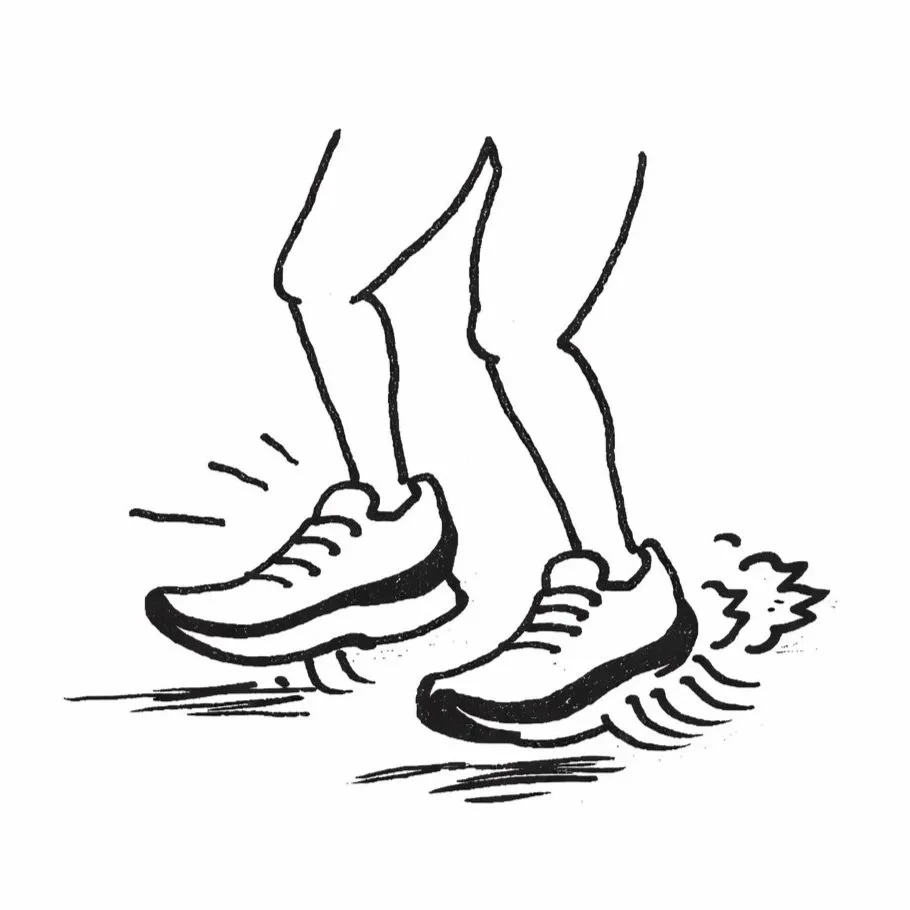
How carbon supershoes actually work
Carbon supershoes don’t catapult runners forward. Instead, they subtly redistribute work. The thick foam reduces demand on the calf muscles, shifting more load to the thigh muscles, which tend to be more fatigue-resistant over long distances. The carbon plate stiffens the big toe joint, enhancing the lever effect during toe-off — particularly important for the flexor hallucis longus tendon, a key contributor to propulsion.
The result is not less effort, but different effort. Running economy improves because the work is redistributed — away from the smaller, more fatigue-prone muscles of the foot and ankle, and towards larger, more resilient muscle groups higher up the leg. These muscles are better designed to absorb load repeatedly and recover from it. For athletes such as Chrissie Wellington, this kind of redistribution can be beneficial — or problematic — depending on what else is happening in the system at the time.
Barefoot shoes: the opposite extreme
Barefoot and minimalist shoes represent a very different idea of efficiency and force redistribution. They rose to prominence with Born to Run, Christopher McDougall’s bestselling book, which argues that humans evolved to run long distances without modern footwear — and that much of today’s running injury may be self-inflicted, the result of over-engineered shoes interfering with a system that once worked remarkably well.
In this view, modern footwear doesn’t protect the foot so much as immobilise it — like placing a joint in a splint. Cushioning dulls sensation. Structure limits movement. Support replaces strength. Strip all that away, the argument goes, and the body is forced to rediscover its natural mechanics.
Barefoot and minimalist shoes therefore represent a very different intervention Thin soles. Minimal cushioning. Maximum flexibility. Like carbon shoes, they change forces around the foot and ankle — but in almost the opposite direction. Instead of offloading the lower limb, they increase demand on the calf, Achilles tendon and the small stabilising muscles of the foot.
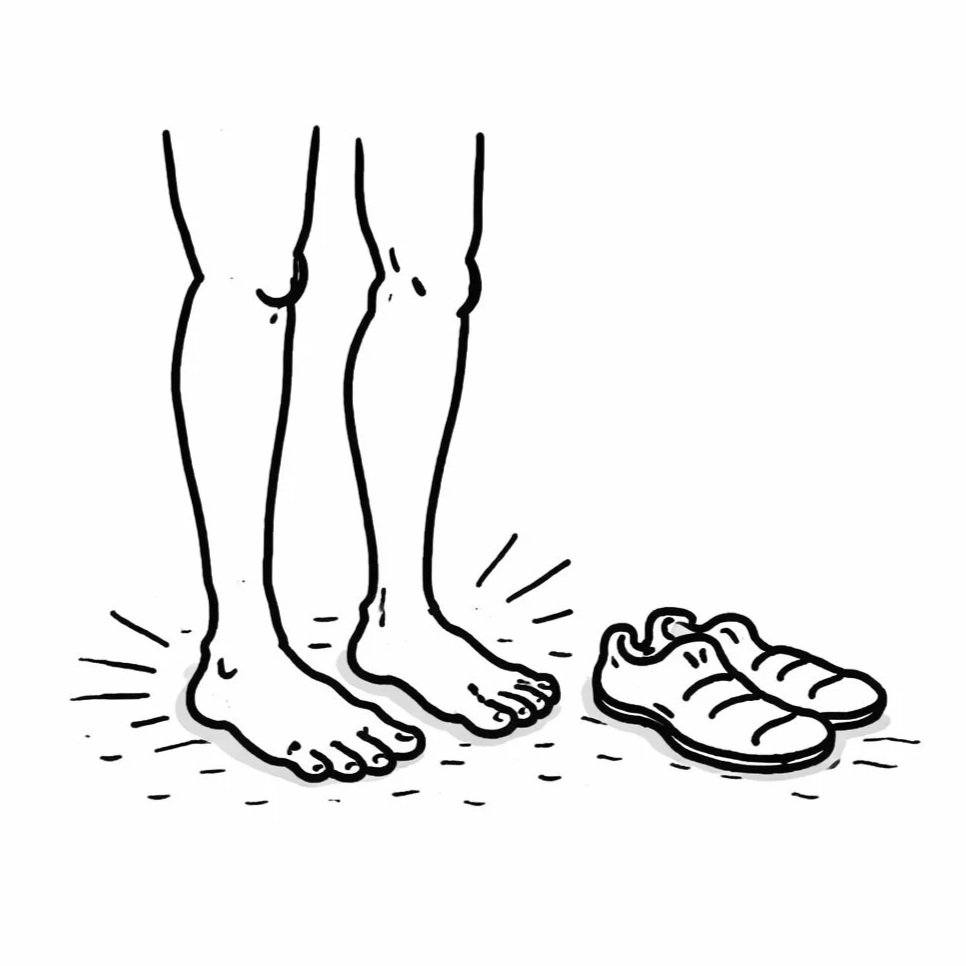
Natural is best?
For some runners, this shift brings genuine benefits. Ground contact becomes more deliberate, cadence often increases and stride length shortens. Foot and ankle muscles work harder and, over time, can become stronger and more responsive. Proprioception — the body’s sense of position and movement — improves. Running can feel lighter, quieter and more connected.
But the appeal to natural has limits. Most of us have worn structured, cushioned shoes since early childhood. Our tissues have adapted accordingly. Asking them to behave like unshod hunter-gatherers is not a return to baseline — it’s a significant change in loading. The problem is not the concept but the transition. Stripping that away too quickly can overload tissues that aren’t ready.
This lesson was learned the hard way in the early 2010s, when claims that barefoot shoes reduced injury risk led to litigation in the United States. The marketing had run ahead of the evidence. The body, as ever, had the final say.
What kind of running shoe is right for you?
Shoes change how forces move through a body that’s already shaped by training history, strength, energy availability, age and adaptation. So the question is not which shoe is fastest, or most natural, but which shoe fits your body, training load, and capacity to adapt.
Carbon supershoes and barefoot shoes are not opposites so much as different ways of shifting load around the system. Neither is inherently protective. Neither is inherently dangerous. The danger is mismatch. Mismatch between shoe and strength; footwear and training volume; mechanical demand and energy availability. Mismatch between ambition and recovery.
Two extremes, different trade-offs
Carbon supershoes
• Improve running economy and performance
• Shift load away from foot and ankle
• Demand strength and adaptation elsewhere
• Best used selectively, not universally
Barefoot / minimalist shoes
• Increase sensory feedback and foot engagement
• Load calf, Achilles and foot structures
• Require slow, deliberate transition
• Can strengthen — or overload — depending on context
What actually causes injury?
When runners get injured, footwear often takes the blame. But over decades of evidence, one factor outweighs all others: training load error. Sudden increases in volume or intensity consistently predict injury more strongly than shoe choice alone.
Shoe choice certainly matters, influencing biomechanics and changing where stress is felt. And in the presence of vulnerability — low bone density, RED-S (relative energy deficiency in sport - see this article), poor strength, inadequate recovery — shoe choice can tip the balance.
These choices play out in real bodies, under real training loads, with real consequences. To understand how footwear choices intersect with injury risk, it helps to listen closely to runners who’ve had to navigate those trade-offs in full view — and reflect honestly on the outcomes.
Learning from experience
Sophie Raworth and Chrissie Wellington come from very different running worlds — public-facing amateur endurance, and professional triathlon — but both have reflected publicly on injury, footwear and adaptation.
Their stories show a pattern: footwear doesn’t create injury in isolation — it reshapes how existing loads are expressed in a body that may already be close to its limits. Sophie Raworth describes a gradual weakening upstream from the foot, with carbon shoes altering mechanics until bone absorbed more load than it could tolerate. For Chrissie Wellington, footwear played a role, but only alongside energy deficiency, hormonal change, bone density and training history. In both cases, the shoe wasn’t the cause, but part of a system under strain.

Sophie Raworth
BBC newsreader and marathon runner
“Carbon shoes fundamentally change how you run. For me, they seemed to immobilise the foot. Everything upstream weakened, and eventually the bone took the strain. I don’t think they’re ‘bad’, but I do think they need to be used carefully — and not all the time.”

Chrissie Wellington OBE
Four-time Ironman World Champion
“I don’t think you can ever point to one thing. My injuries have come from a combination of training load, energy availability, hormonal change, bone density — and yes, footwear. Shoes can change how forces move through your body, but they don’t act in isolation. The danger is believing there’s a single cause, or a single solution.”
Learning from other sports
As orthopaedic surgeons, we see this pattern everywhere. Ballet dancers in rigid pointe shoes. Climbers in aggressively down-turned footwear. Cyclists in extreme aero positions. Swimmers stressing shoulders through repetitive catch mechanics.
Specialised equipment improves performance. It always changes load. And it always demands adaptation. We accept this intuitively in most sports. Running is simply catching up.
Choose wisely, use wisely
Both carbon supershoes and barefoot shoes alter biomechanics and, in doing so, may alter injury patterns. The evidence is still emerging, and clinicians are watching closely. Most surgeons and sports-medicine doctors I’ve spoken to struggle to attribute specific injuries directly to a shoe alone.
The practical advice is consistent across extremes: build strength, introduce changes gradually, and avoid making any single shoe your default for every run. Mark Gillet, the Premier League Chief Medical Officer, put it to me bluntly: “Race in them if you want. Train in them all the time and you’ll get injured.”
We are living through a moment of extraordinary choice in running footwear. That’s a privilege — and a responsibility. As Radcliffe, Raworth and Wellington have shown, there’s no universally correct shoe. There is only suitability, timing and restraint. Carbon supershoes can be transformative. Barefoot shoes can be illuminating. Both can be harmful if adopted without thought. The question is not which extreme to choose, but how to stay somewhere sensible in between. As with training load, strength and recovery, footwear works best when it respects the body’s ability to adapt — not when it tries to outsmart it.
Shoes change how forces move through a body that’s already shaped by training history, strength, energy availability, age and adaptation. So: ask not whether a shoe is good or bad, but how different shoes shift load — and for whom this helps, or harms.
